img


Dear Friends,
As we enter into the holiday season, we wish you and your families all the best.
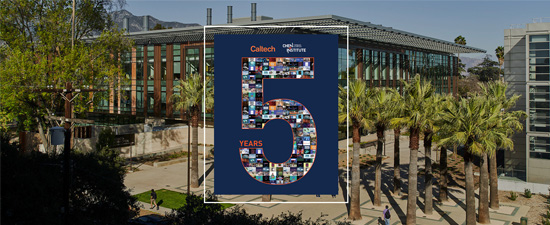
Last week, we had cause for great celebration as we observed the fifth anniversary of the Tianqiao and Chrissy Chen Institute for Neuroscience at Caltech. To celebrate, we worked with Caltech to create a new center, the Center for Data Sciences and A.I., which will enable neuroscientists to be even more effective by teaching them interdisciplinary skills they can use analyze and learn from the vast amounts of data they generate in lab experiments. We believe strongly in this approach and are in discussions with other institutions about similar programs.
As we look forward to 2022, we are excited to be launching other new initiatives and hope that our humble, ongoing contributions to brain and mind research will help to propel the field forward.
Again, we wish you the happiest of holidays.
Warmly,
img
Tianqiao Chen Chrissy Luo
News
Tianqiao and Chrissy Chen Institute for Neuroscience at Caltech Celebrates 5th Anniversary
img
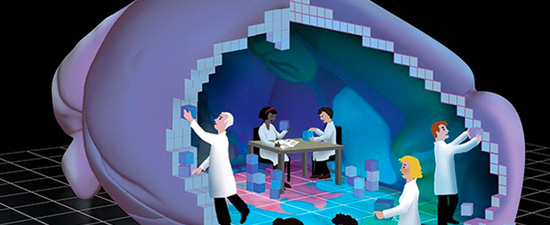
On December 6th, the Tianqiao and Chrissy Chen Institute for Neuroscience at Caltech celebrated its fifth anniversary and announced that, with the support of the Chens, they are creating the Center for Data Science and Artificial Intelligence (AI). The new Center will be co-directed by Professors Lior Pachter and Pietro Perona and its mission is to help young neuroscientists acquire and improve the skills needed to analyze and interpret the vast amounts of data generated by their lab experiments.
Read the Caltech anniversary publication
2021 Prix Versailles – The World Architecture and Design Awards
img
The Chen Neuroscience Research Building at Caltech recently won the 2021 Prix Versailles Award for Campuses. This international award was created in 2015 to promote a better interaction between the cultural and economic spheres of society.
Read more on Prix Versailles site
Mikhail Shapiro Named HHMI Investigator
img
In September, Mikhail Shapiro, professor of chemical engineering and an affiliated faculty member of the Tianqiao and Chrissy Chen Institute for Neuroscience at Caltech, was named a Howard Hughes Medical Institute (HHMI) investigator. He was chosen for his work using sound waves to image and control the behavior of cells within living tissues.
Read more on TCCI for Neuroscience site
David Van Valen Named a Moore Inventor Fellow
img
In October, David Van Valen, assistant professor of biology and biological engineering and an affiliated faculty member of the Chen Institute for Neuroscience at Caltech, was named a 2021 Moore Inventor Fellow for his research which aims to understand how living systems store, process, and transfer information.
Read more on the TCCI for Neuroscience site
Unlocking Philanthropy with Chrissy Luo and Tianqiao Chen: A KPMG Case Study
img
This interview with the Chen Institute’s founders is part of KPMG’s “Philanthropists in Action” case study series, which looks at emerging trends in the philanthropy landscape.
View the case study on KPMG’s website
SUPPORTING THE COMMUNITY
img img img img
This quarter, in addition to supporting Neuroscience 2021 and ACII 2021, we were happy to see a strong turnout for the “Cutting Edge in Cognitive Science” conference which we co-organized with Science Magazine. We also held two TCCI ZNext Seminars in China, one focused on how computational psychiatry helps with the diagnosis and treatment of mental illness; the other on how we perceive the world.
RESEARCH
How Do You Study Facial Bias Without Bias?
img
When we encounter an unfamiliar face, we tend to make snap judgments. Does the person look smart, attractive, or young? Are they trustworthy or corrupt? Neuroscientists and psychologists study how our brains form these facial biases, and how the judgments ultimately influence the way people behave.
Read more on the TCCI for Neuroscience
New Technology is One Step Closer to Targeted Gene Therapy
img
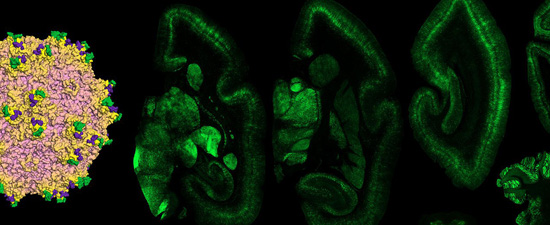
A team led by Caltech researchers has developed a gene-delivery system that can specifically target brain cells while avoiding the liver. This is important because a gene therapy intended to treat a disorder in the brain, for example, could also have the side effect of creating a toxic immune response in the liver, hence the desire to find delivery vehicles that only go to their intended target.
Read more on the TCCI for Neuroscience
A Beetle Gland Illustrates How New Organs Evolve
img
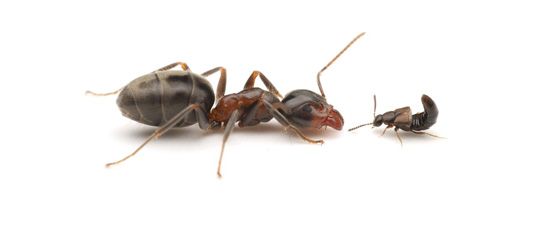
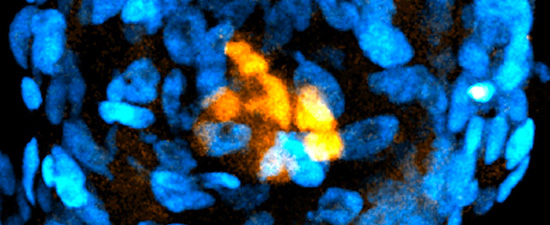
In a bid to understand how cells create organs, Caltech researchers have mapped out the precise process by which these glands evolved in the rove beetle Dalotia coriaria. The work reveals a new paradigm for how complex organs may evolve throughout the animal kingdom.
Read more on TCCI for Neuroscience site
How to Read a Jellyfish’s Mind
img
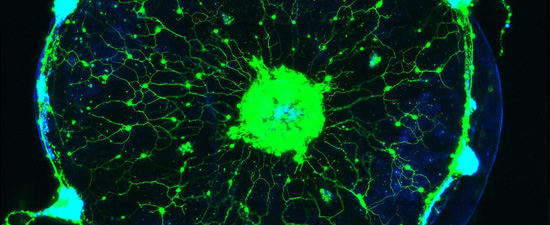
Understanding the precise circuits of brain cells that orchestrate all of our day-to-day behaviors—such as moving our limbs, responding to fear and other emotions, and so on—is an incredibly complex puzzle for neuroscientists. But now, fundamental questions about the neuroscience of behavior may be answered through a new and much simpler model organism: tiny jellyfish.
Read more on the TCCI for Neuroscience site
Caltech Researchers Team Up to Fight Parkinson’s Disease
img
A team of Caltech TCCI-affiliated researchers received a major grant from the Aligning Science Across Parkinson's (ASAP) initiative that provides more than $11 million to carry out research into Parkinson’s Disease, the second most common neurodegenerative disease after Alzheimer's, affecting more than 10 million people worldwide.
Read more on the TCCI for Neuroscience site
Identifying the association between physical activity and depression among community-dwelling older adults
img
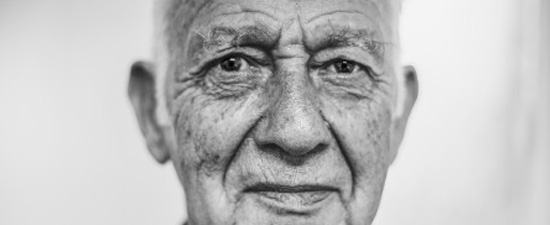
Tianqiao and Chrissy Chen Institute (TCCI) investigator Professor Huang Yanyan recently co-authored an article published in BMC Geriatrics, an international journal dedicated to geriatrics. The study, supported by TCCI, revealed a correlation between the amount and patterns of physical activity and depression among the elderly community in Shanghai.
Read the paper on the BMC Geriatrics site
Mapping Millions of Cells in the Mouse Brain
img
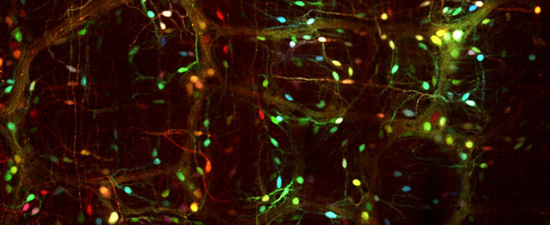
Building a map of the complex human brain and its approximately 100 billion individual neurons is no easy task so researchers started with the mouse. Now, a new paper describes the minute genomic details of the mouse brain at unprecedented resolution and how several types of genomics techniques were combined to enable this analysis.
Read more on the TCCI for Neuroscience site
Researchers Build Embryo-Like Structures from Human Stem Cells
img
Research done on surplus or donated human embryos is vital to understanding the earliest stages of human development. Now, researchers have created embryo-like structures out of human stem cells. Though these embryo-like structures have some key differences from real embryos, they will be critical in answering open questions about human development.
Read more on Caltech’s site