img


Dear Friends,
Welcome to the glorious first days of summer, made even more enjoyable with the new freedoms granted to us by the rapidly spreading wave of vaccinations around the world. After more than a year of complete isolation, we have begun to take the first steps to reconnect in person with close friends and family and it’s been incredible.
We hope you enjoy our brief update below. We are especially excited about the Chen Institute’s partnership with SCIENCE/AAAS to organize and host two events. The first is a free webinar on June 15th at 9am PST which explores how we may be able to use data from wearables and fitness trackers to improve mental health and cognitive function. The second is a two-day conference in October called “Cutting Edge Research in Cognitive Science” which will explore the latest developments in cognitive science.
As always, we thank you for your support!
Sincerely,
img
Tianqiao Chen Chrissy Luo
News
TCCI Investigator Tao Hu Wins Outstanding Contribution Award
img
On May 25, Tao Hu, Deputy Director and Researcher at Shanghai Institute of Microsystem and Information Technology under the Chinese Academy of Sciences and Investigator at the Tianqiao and Chrissy Chen Institute, won an Outstanding Contribution Award for Young Scientists in Shanghai.
Read more
TCCI and Tencent Game Jointly Launch First Brain Cognition Training Game
img
On May 16, Tianqiao and Chrissy Chen Institute (TCCI) announced that “Pavlov: Brain’ it on,” its first brain cognition training game jointly developed with Tencent Games, will go live within the year. The game is designed to improve the cognitive ability of teenagers and consists of dozens of mini games that have different rules but are equally intriguing. It will only take players a few minutes to improve different aspects of their brain’s cognitive ability including attention, speed of thinking, memory, induction and inference as well as spatial imagination.
Read more
Neurochat 2021
img
TCCI was pleased to support Neurochat 2021, a three-day, online discussion for students, post-doctoral fellows and professors in China who work in neuroimaging, cognitive neuroscience, computational neuroscience and computational cognitive science.
Read more
SUPPORTING THE COMMUNITY
June 15th, 9am - 10am PT
SCIENCE Webinar:
The shrinking distance between human and machine: Computing where we end and the technologies begin
Mobile and wearable technologies such as smartphones, smartwatches, and fitness trackers are growing more ubiquitous by the day and they allow us to track a growing array of biological measures in mass populations. Users are empowered to make more informed choices impacting their lifestyle, physical health and mental health and cognitive functioning. This free webinar will examine how humans are increasingly integrating these technologies, enabling benefits well beyond the passive collection of data.
September 4 - 7, 2021
49th Meeting of the European Brain and Behavior Society
We’re happy to support this meeting which assembles a wide variety of scientists interested in the study of brain and behavior in health and disease, using all research approaches.
October 6 - 7, 2021, 9am-12pm PT both days
SCIENCE Conference:
Cutting Edge Research in Cognitive Science
Join us for a two-day conference organized by SCIENCE magazine and the Chen Institute to explore the most recent breakthroughs in some fields of cognitive science. The first day will focus on recent progress in Affective Computing/ Emotion/ Facial Expression. The second day will concentrate on Machine Learning/ Speech/ Language.
RESEARCH
Reading Minds with Ultrasound: A Less-Invasive Technique to Decode the Brain’s Intentions
img
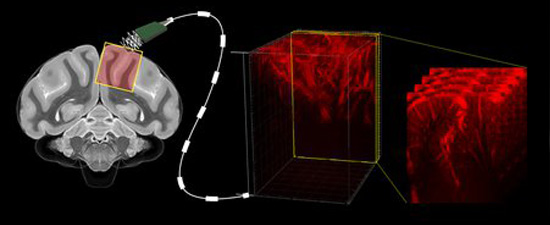
Brain–machine interfaces (BMIs) are devices that read and interpret brain activity and transmit instructions to a computer or machine. Though this may seem like science fiction, existing BMIs can, for example, connect a paralyzed person with a robotic arm; the device interprets the person’s neural activity and intentions and moves the robotic arm correspondingly. A major limitation is that the devices require invasive brain surgery to read out neural activity. Until now.
Read more on Caltech’s website
Hungry Fruit Flies are Extreme Ultramarathon Fliers
img
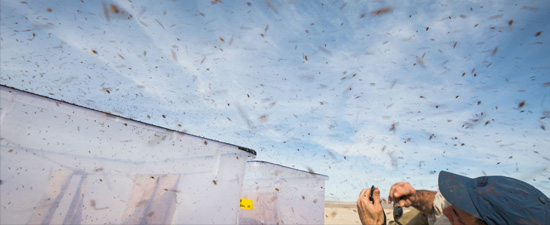
In 2005, an ultramarathon runner ran continuously 560 kilometers (350 miles) in 80 hours, without sleeping or stopping. This distance was roughly 324,000 times the runner’s body length. Caltech scientists have discovered that fruit flies can fly up to 15 kilometers (9 miles) in a single journey—6 million times their body length, or the equivalent of over 10,000 kilometers for the average human. In comparison to body length, this is further than many migratory species of birds can fly in a day.
Read more on Caltech’s website
Decoding the Association between Blood Pressure and Cognitive Impairment
img
Professor Yu Jintai, a researcher from the Neurology Department of Fudan University-affiliated Huashan Hospital and Tianqiao and Chrissy Chen Institute (TCCI) Investigator, revealed an association between blood pressure and the risk of cognitive impairment and dementia through a large-scale, five-year cohort study.
Read more