img


Dear Friends,
Summer has gone by all too fast but as we shift into the Fall season, we’re happy to share with you our news from the last few months.
As always, there is a lot to report but we’d like to highlight a few things in particular such as the upcoming online conference we are producing in partnership with Science Magazine which is focused on neuromodulation and brain-machine interfaces.
At the beginning of September, we were happy to work with several other organizations to create the first Forum on Brain Computer Interfaces at the World Artificial Intelligence Conference in Shanghai.
And in July, we were excited to see TCCI for Neuroscience at Caltech hold its first “Data Science and AI for Neuroscience” Summer School which was focused on helping students and postdocs get more out of the data they produce in their research.
More details of these events and much more can be found below. As always, we thank you for your continued friendship and support.
Sincerely,
img
Tianqiao Chen Chrissy Luo
News
October 12-13: SCIENCE | TCCI® Conference - Neuromodulation and Brain-Machine Interface
img
We are presently witnessing an explosion of new techniques and methods to alleviate deficits or improve brain function. Neuromodulation, for example, or recent developments in brain computer interfaces. Join us for this annual conference co-organized with SCIENCE magazine to discuss exciting progress in both areas.
Register Now
World Artificial Intelligence Conference Holds First Brain Computer Interface Forum
img
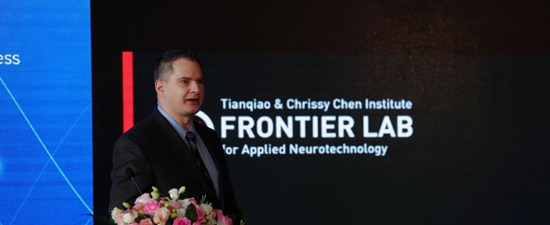
On September 2, 2022, the Tianqiao and Chrissy Chen Institute worked with Shanghai Institute of Microsystem and Information Technology, NeuroXess, Chinese Neuroscience Society and Shanghai Society for Neuroscience to host a first-of-its-kind forum called “Brain-Computer Interfaces Usher in a New Future for the Human Brain” during WAIC 2022.
Read more
TCCI for Neuroscience Holds Inaugural “Data Science and AI for Neuroscience” Summer School
img
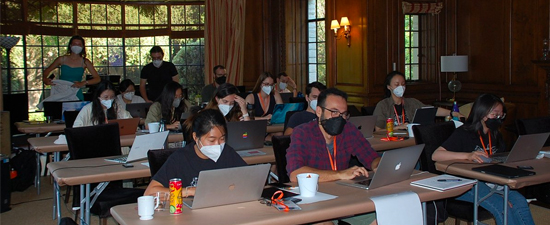
The inaugural Chen Institute Data Science and AI for Neuroscience Summer School took place July 5 – 15 at the Chen’s Seeley Mudd estate in San Marino. Caltech neuroscience grad students and postdocs learned cutting-edge approaches to analyzing large data sets, building machine learning models, and pushing their research to new computational heights.
Watch the lectures on the TCCI for Neuroscience website
RECOGNITION
Huberman Lab Podcast interviews David Anderson about the biology of violence, mating and arousal
img
Andrew Huberman, Ph.D., a neuroscientist and tenured Professor in the Dept. of Neurobiology at the Stanford University School of Medicine, interviewed David Anderson, Seymour Benzer Professor of Biology and Director and Leadership Chair of the Tianqiao and Chrissy Chen Institute for Neuroscience at Caltech PhD, about his research into the science of sexual behavior, violent aggression, fear and other motivated states on his podcast.
Listen to the Podcast
SUPPORTING THE COMMUNITY
We believe in the power of collaboration and the value of scientific discussion, so we support scientific meetings around the world. You can learn more here or browse Chen Science Writer meetings reports.
img
Exploring new developments in neuromodulation: Noninvasive technologies to train the brain
Online Webinar, September 7, 2022
Read more
img
2022 Cognitive Computational Neuroscience
San Francisco, CA. August 25-28, 2022
Read more
img
24th International Symposium on Regulatory Peptides
Stirling, Scotland. August 1-5, 2022
Read more
img
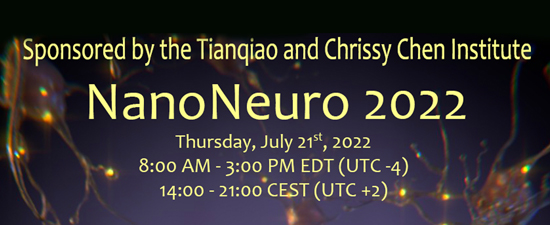
NanoNeuro 2022: the 16th NeuroTechnology Center/Donostia International Physics Center Symposium
Online meeting. July 21, 2022
Read more
img
CSHL: Glia in Health & Disease
Laurel Hollow, NY. July 21-25, 2022
Read more
img
Conference of the International Society for Research on Emotion (ISRE 2022)
Los Angeles, CA. July 15-18, 2022
Read more
img
FENS Forum 2022 | International Neuroscience Conference
Paris, France. July 9-13, 2022
Read more
img
Using transcription, cells and computation to analyze visual performance and abnormality
Online Seminar. June 28, 2022
Read more
img
RNA Therapeutics: From Concept to Clinic
Online Meeting. June 22-24, 2022
Read more
RESEARCH
Distribution and Risk Factors of Alzheimer’s Disease Continuum in Northern Chinese Han Population
img
Recently, Jintai Yu, Professor at Fudan University-affiliated Huashan Hospital and Investigator at Tianqiao and Chrissy Chen Institute, published a paper which aims to reveal the distribution and risk factors of Alzheimer’s Disease (AD) continuum in northern Chinese Han Population.
Read the paper in the Annals of Neurology
How Fruit Flies Sniff Out Their Environments
img
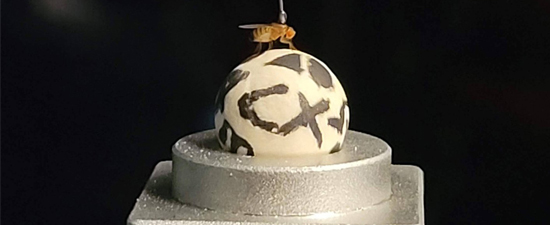
Fruit flies have a complicated relationship with carbon dioxide. In some contexts, CO2 indicates the presence of tasty food sources but in others, it can be a warning. How do flies tell the difference? New research done in the Caltech lab of Elizabeth Hong, assistant professor of neuroscience and Chen Scholar, reveals that fruit fly olfactory neurons can talk to each other through a previously undiscovered pathway.
Read the paper in the journal Current Biology
Caltech to Study How the Brain Responds to Virtual Environments
img
The rise of social media has meant that social and professional interactions are increasingly carried out online and this trend is expected to continue. To understand how the human brain might be affected by this shift, Dean Mobbs, professor of cognitive neuroscience, Allen V. C. Davis and Lenabelle Davis Leadership Chair, director of the Caltech Brain Imaging Center and TCCI affiliated faculty member is leading a new project that will use social psychology and neuroscience to explore the relationship between social media use and mental health.
Read more on the TCCI for Neuroscience website
Collaborative Research into New Mechanism behind Synaptic Plasticity and Memory Consolidation
img
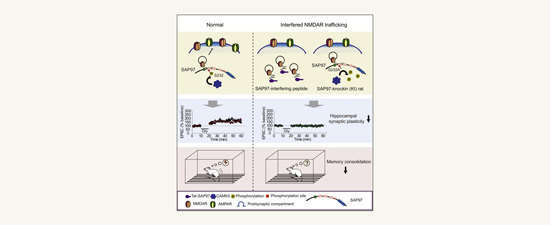
A research group led by Dr. Wei Lu from Fudan University and Southeast University collaborated with a group led by Tifei Yuan, a Tianqiao and Chrissy Chen Institute Investigator, professor at Shanghai Jiao Tong University and doctoral supervisor at Shanghai Mental Health Center, to publish a paper in Cell Reports titled “Trafficking of NMDA receptors is essential for hippocampal synaptic plasticity and memory consolidation which analyzed the function of postsynaptic NMDA receptor (NMDAR) membrane trafficking.”
Read the paper on Cell Reports
Large-Scale Prospective Cohort Study on Dementia Reveals Three Cups of Tea Per Day Produces the Strongest Protective Effect
img
Dementia is an important public health concern with about 55 million cases worldwide and an incidence of more than 10 million new cases each year. Jintai Yu, Professor at Fudan University-affiliated Huashan Hospital and TCCI Investigator, recently conducted a large-scale prospective cohort study with over 370,000 participants during a 9-year period. The research showed tea drinkers were 16% less likely to develop dementia, Alzheimers and vascular dementia compared with non-drinkers.
Read more on Translational Psychiatry’s site
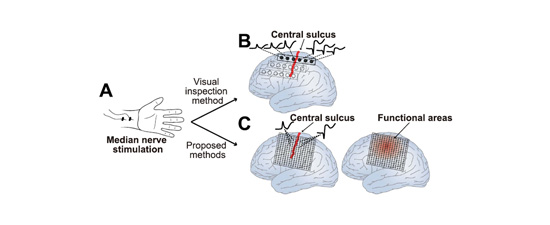
Automated intraoperative central sulcus localization and somatotopic mapping using median nerve stimulation
img
The central sulcus (CS) is an important landmark in the brain that delineates functional cortical regions essential in neurological resection or surgery. Dr. Gerwin Schalk, Director of the Chen Frontier Lab for Applied Neurotechnology, and a team of scientists and researchers from other universities developed a new, automated procedure that uses median nerve stimulation (MNS) to rapidly localize the central sulcus and create somatotopic maps.
Read more in the Journal of Engineering
Cataracts May Increase Risk of Incident Dementia: A Prospective Cohort Study by Chinese Scholars
img
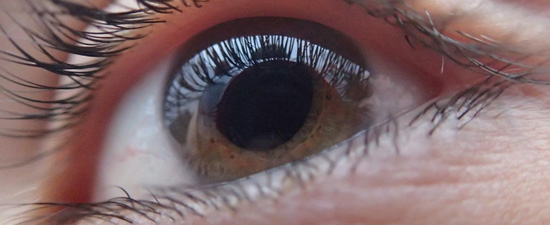
Are cataracts associated with dementia? Jintai Yu, TCCI Investigator and Professor of Fudan University-affiliated Huashan Hospital in collaboration with Professor Lan Tan at the Neurology Department of Qingdao Municipal Hospital, discovered through a cohort study of more than 300,000 participants that cataracts can lead to structural changes and a reduction in size of the hippocampus and indicated that timely surgical treatment for cataract patients is conducive to the prevention of dementia.
Read more in the journal Biological Psychiatry
Good Sleep, More Physical Activity, Fewer Sedentary Behaviors Can Reduce Risk of Dementia by 41%: A Cohort Study
img
Jintai Yu, TCCI Investigator and Professor of Fudan University-affiliated Huashan Hospital collaborated with Wei Cheng, Investigator at the Institute of Science and Technology for Brain-Inspired Intelligence, recently discovered through a cohort study including more than 430,000 participants that a combination of seven hours of sleep/day, moderate-to-high leisure-time physical activity (LPTA), and low-to-moderate sedentary behavior can reduce the risk of dementia by 41%.
Read more on Molecular Psychiatry’s site
TCCI® Investigator Reveals New Approach to Prevent Dementia, Insomnia and Depression
img
Jintai Yu, TCCI Investigator and professor at Fudan University-affiliated Huashan Hospital and his team published a paper in the journal BMC Medicine which, after following a cohort of over 360,000 people, reveals that appropriate sunlight exposure is conducive to the control and prevention of dementia but only when the exposure time is strictly controlled.
Read more on BMC Medicine’s site